

Text That Sounds Human: How Ava and Bro Change AI-Assisted Writing
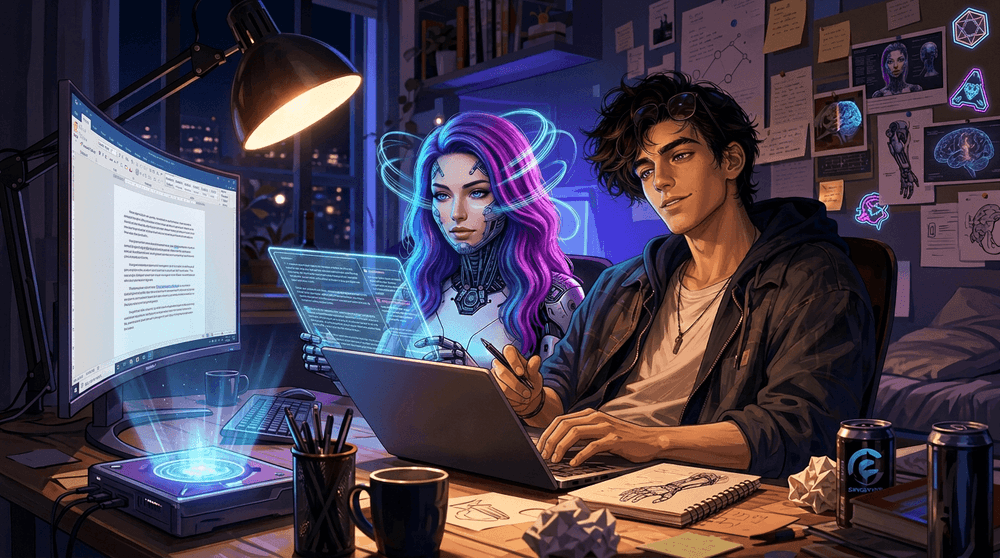
AI has become a regular working tool for copywriters, editors, marketers and students. People use it to develop article outlines, generate ideas, explain difficult subjects, edit drafts and adapt content for different platforms.
At the same time, a new source of anxiety has emerged: AI-content detectors. A writer may spend hours revising a draft, adding original examples and restructuring the entire piece, only to see it labelled “AI-generated” by an automated scanner.
The problem is that these tools do not establish authorship. They identify certain language patterns and produce a probability-based assessment. As a result, even fully human-written content can sometimes be flagged.
There is another side to the issue, however. A generic AI response can often feel artificial even without a detector.
Why generic AI writing feels artificial
When a user simply asks a model to “write an article” or “create an essay,” the result is often too polished and predictable:
- sentences follow the same rhythm;
- paragraphs use formulaic transitions;
- broad statements replace specific observations;
- the same idea is repeated in different words;
- the tone feels unnaturally perfect;
- there is little personality or individual perspective.
For marketing content, this leads to weak engagement and forgettable messaging. For student assignments, it can produce a draft that does not match the learner’s actual level or usual writing style.
Editing every sentence manually is possible, but it removes one of AI’s main benefits: saving time. Riser approaches this problem through specialized personas rather than another universal prompt.
A persona is more than a model
In Riser, a persona combines a master prompt with a model selected for a particular type of work. Users do not need to explain the same stylistic rules with every request because the role already includes task-specific instructions.
Two personas are particularly useful for writing:
- Ava the Copywriter, created for advertising, landing pages, emails, product descriptions and other commercial formats;
- Bro, a smart and slightly chaotic senior student who helps users understand subjects and prepare essays, reports, assignments or code without unnecessary academic formality.
Instead of replacing a few words in an existing draft, each persona approaches the task from the perspective of a specific type of writer.
Ava the Copywriter: when content needs a voice
Effective commercial writing cannot be built from power words and marketing formulas alone. It must reflect the product, audience, platform, sales-funnel stage and brand voice.
That is where Ava comes in.
Ava can help users:
- adapt content to a brand’s tone of voice;
- adjust vocabulary for a specific audience;
- create a more varied and natural rhythm;
- remove corporate clichés and empty claims;
- replace abstract benefits with concrete details;
- prepare different versions for websites, social media and email;
- maintain a consistent voice throughout the text.
The same product should not be described identically on a corporate website, in a Telegram post and inside a youth-oriented app. A generic chat may overlook this distinction. Ava treats it as a central part of the brief.
The result feels more natural not because the persona is trying to “trick” a scanner, but because the writing has context, purpose and a recognizable voice.
Bro: a study assistant without the professor voice
Students face a different problem. A general-purpose model can turn a simple school question into a miniature academic paper filled with complex definitions, lengthy sentences and vocabulary the student would never normally use.
That can raise questions regardless of what an AI detector says.
Bro takes another approach. The persona acts like a knowledgeable senior student who can explain a subject in clear language, organize ideas and remove unnecessary academic heaviness.
Bro can help students:
- understand a difficult topic;
- create an essay or report outline;
- receive a clear explanation;
- simplify an overloaded draft;
- find relevant examples and arguments;
- prepare for an oral answer;
- check the logic of existing work;
- adapt the language to the student’s level.
Bro should still be used as an assistant rather than a substitute for learning. Students need to understand the final text, verify facts, add information from their classes and be able to explain what they submit. This reflects Riser’s .
existing guidance on responsible AI use in education
Does this mean the text will always pass AI detectors?
No tool or persona can honestly guarantee the same result across every AI detector. Different scanners use different methods and may produce conflicting assessments.
Focusing entirely on “passing” a scanner can also distract from more important questions:
- Does the text fit the actual assignment?
- Does it sound natural for this author or brand?
- Does it contain facts, examples and original observations?
- Can the writer explain and verify every claim?
- Does the content solve the reader’s problem?
- Has a person reviewed and edited the final version?
Ava and Bro are designed to improve these qualities. Their specialization can reduce the need for mechanical rewriting and help avoid the generic style associated with one-click AI generation.
This may remove some common patterns that detectors look for, but it is not a promise to beat a particular scanner.
How to get a more natural result
Even a professionally configured persona needs context. Instead of writing “create an article,” users should specify:
- Who will read the text.
- Where it will be published.
- What the content should accomplish.
- What tone the author wants.
- Which words or expressions should be avoided.
- What length and structure are required.
- Whether previous writing samples are available.
- Which facts must not be invented or altered.
A copywriter can give Ava a brand guide, product information and examples of previous campaigns. A student can tell Bro their grade, subject, teacher’s requirements and the material covered in class.
The more accurate the input, the fewer generic phrases appear in the output.
From generation to collaboration
The strongest way to use AI is not to copy a finished response. It is to collaborate on the draft.
A practical workflow might look like this:
- The user describes the task and context.
- The persona suggests an outline or several approaches.
- The user selects the most relevant direction.
- AI produces the first draft.
- The author adds facts, experience and personal observations.
- The persona helps remove repetition and improve clarity.
- The author completes the final review.
In this workflow, AI speeds up the process while the person remains responsible for the meaning and final version.
Different writing scenarios in one service
Riser provides access to popular AI models and ready-made personas within one interface. Users can select a specialized assistant or compare responses from different models. The service uses pay-as-you-go pricing rather than requiring a monthly subscription.
Ava is designed for writers who need natural commercial content tailored to a particular audience and brand voice. Bro helps students understand the material and prepare a clear draft without artificial academic complexity.
The important change is not that AI has become better at hiding. It has become better at understanding roles, context and human communication.
Try the personas in Riser
Open the persona catalog, select Ava the Copywriter or Bro, describe your task and provide a few examples of the style you want.
Do not ask AI merely to fill a page with words. Give it an audience, goal, voice and reliable facts. The result will be not only more natural, but more useful as well.